3%
of US employment is in start-ups, which produce almost 20 per cent of gross job creation
Chapter 04
Paper III · Third edition · A discussion series for ecosystem builders
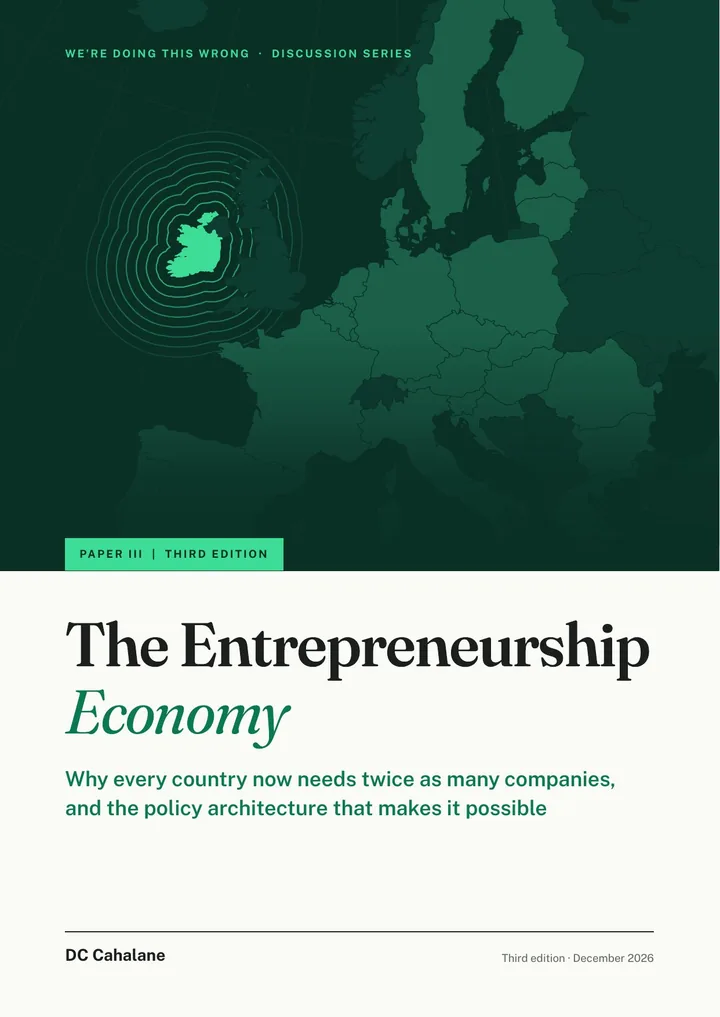
Why every country now needs twice as many companies, and the policy architecture that makes it possible.
The argument
The next jobs strategy is a company-creation strategy. This paper sets out the architecture: six moments where founders stop, one number to publish every year, and a first twelve months that any government can begin on Monday.
18Chapters in three parts: the case, the architecture, implementation
13Countries the cases come from
10Checked numbers that carry the argument
Summary
Governments think about employment in terms of workers, skills, vacancies, employers, sectors and inward investment. Those categories still matter, but they are incomplete. They assume that the future will contain enough employers to absorb the people who need work, and that assumption is becoming more dangerous.
This is a structural shift, not a cycle. Three forces are running together: productivity without headcount inside firms, geopolitical concentration risk in supply chains, and the AI transition in cognitive work. Together they weaken the link between firm growth and job growth in exactly the firms that used to anchor employment.
Inside the paper
What is inside
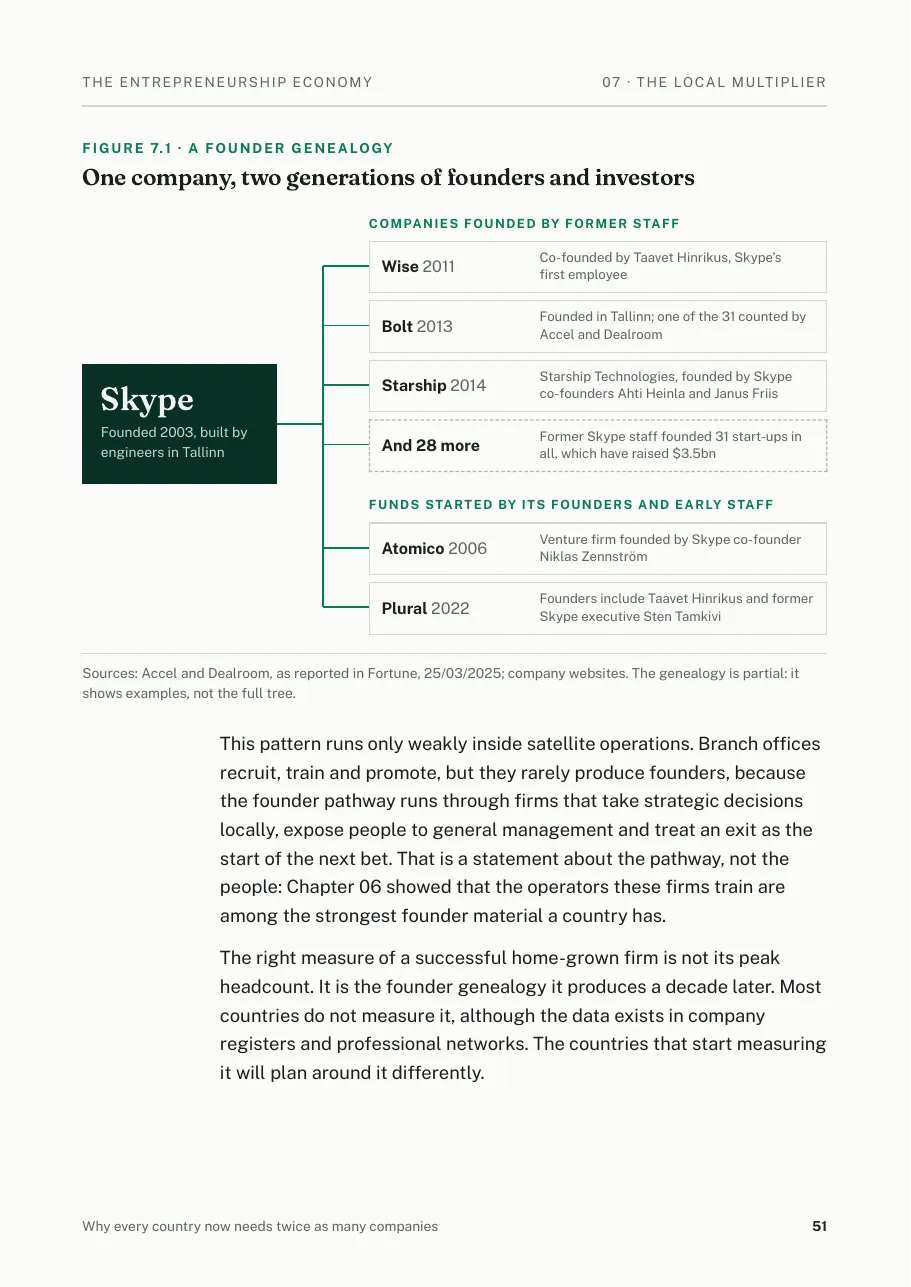
The age of fragile growth. The new jobs equation. Entrepreneurship as economic sovereignty. The employer gap. The multinational illusion. The FDI dividend. The local multiplier.
The missing middle of policy. The Twenty-Eighth Regime. Government as first customer. Capital is not enough. Universities, research and the founder pipeline. The immigration question. Regional renewal. The AI employment shock.
The policy stack. What governments should stop doing. The national entrepreneurship dashboard. The first twelve months. One country’s version. Where this lands.
At a glance
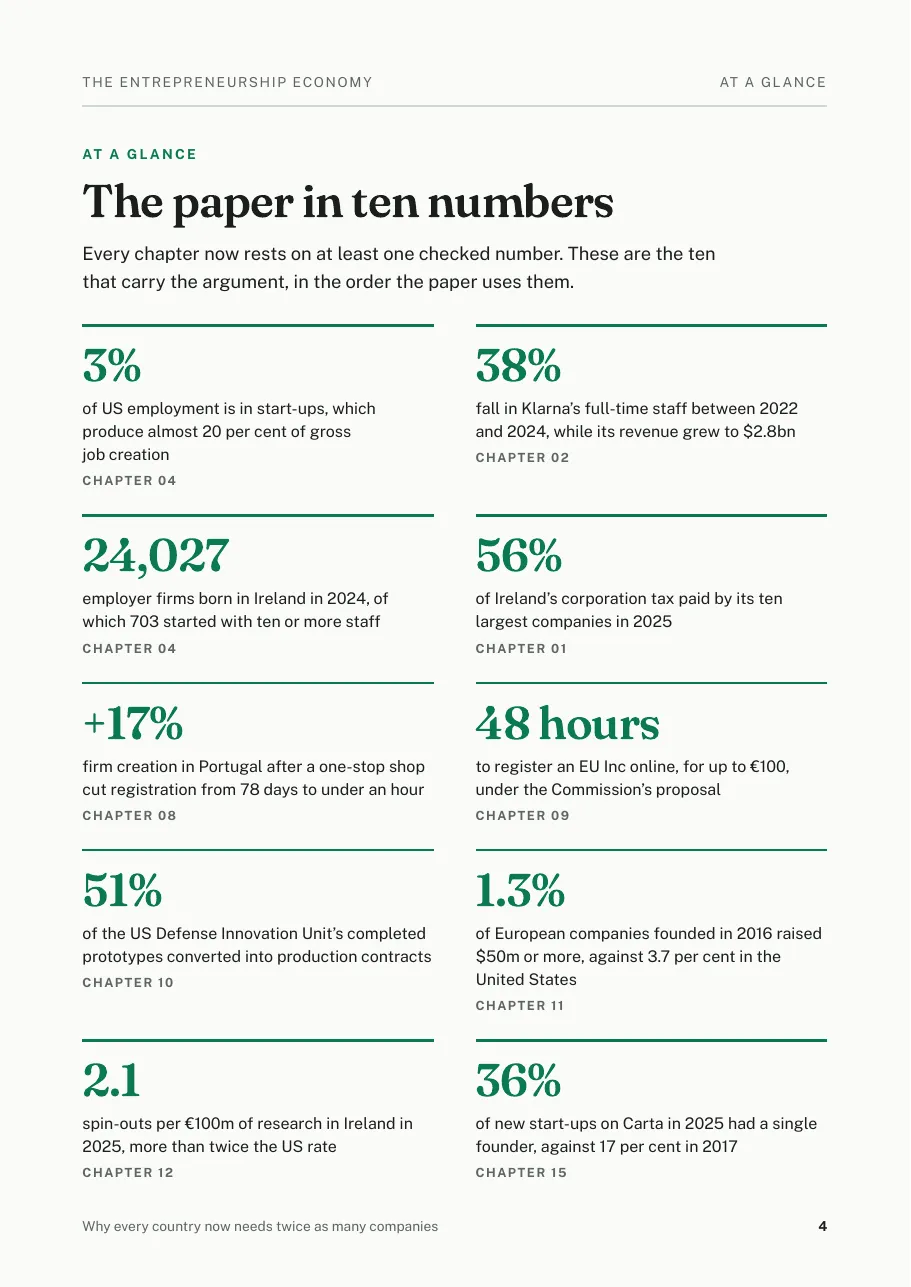
Every chapter rests on at least one checked number. These are the ten that carry the argument, in the order the paper uses them. The source for each is given in the chapter named.
3%
of US employment is in start-ups, which produce almost 20 per cent of gross job creation
Chapter 04
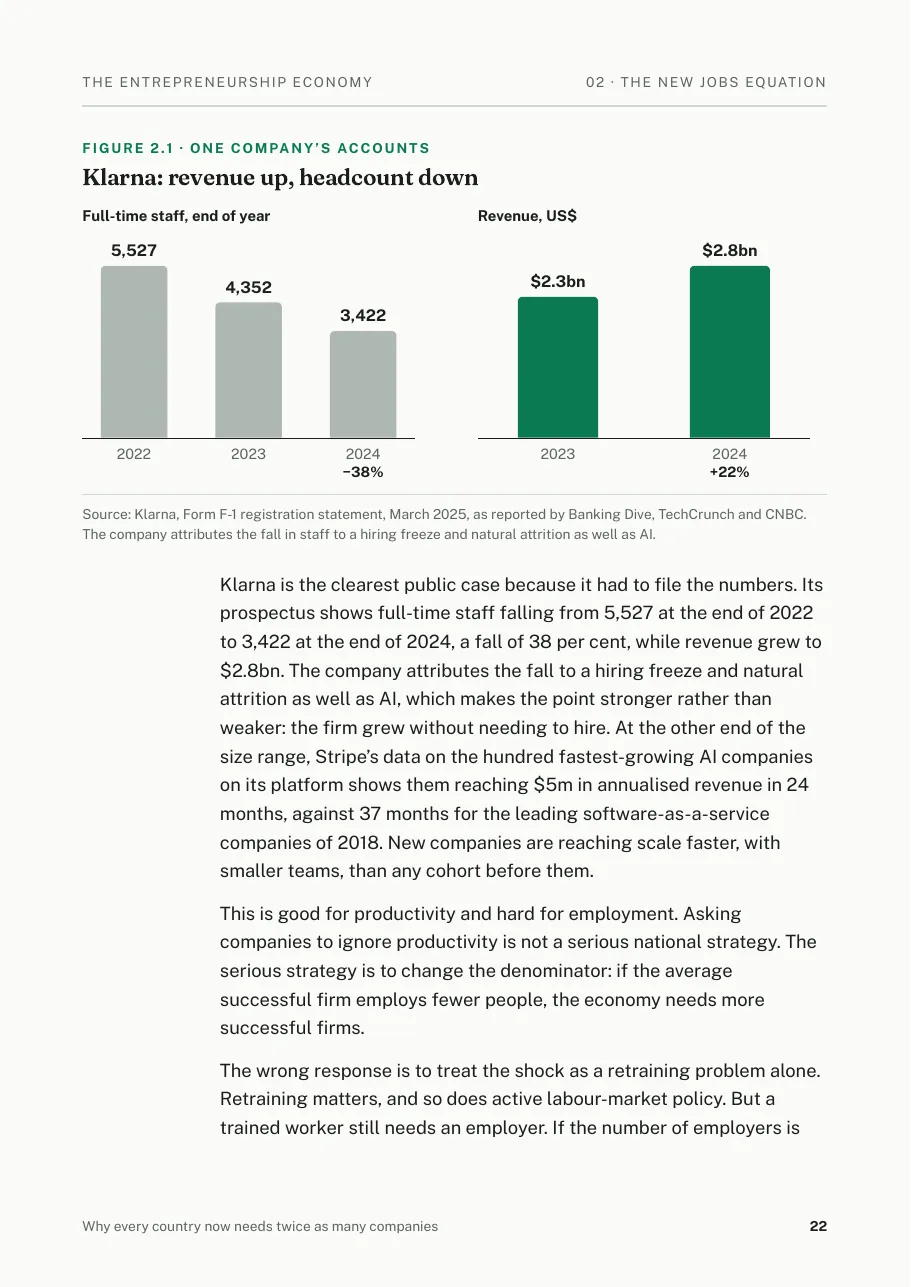
38%
fall in Klarna’s full-time staff between 2022 and 2024, while its revenue grew to $2.8bn
Chapter 02
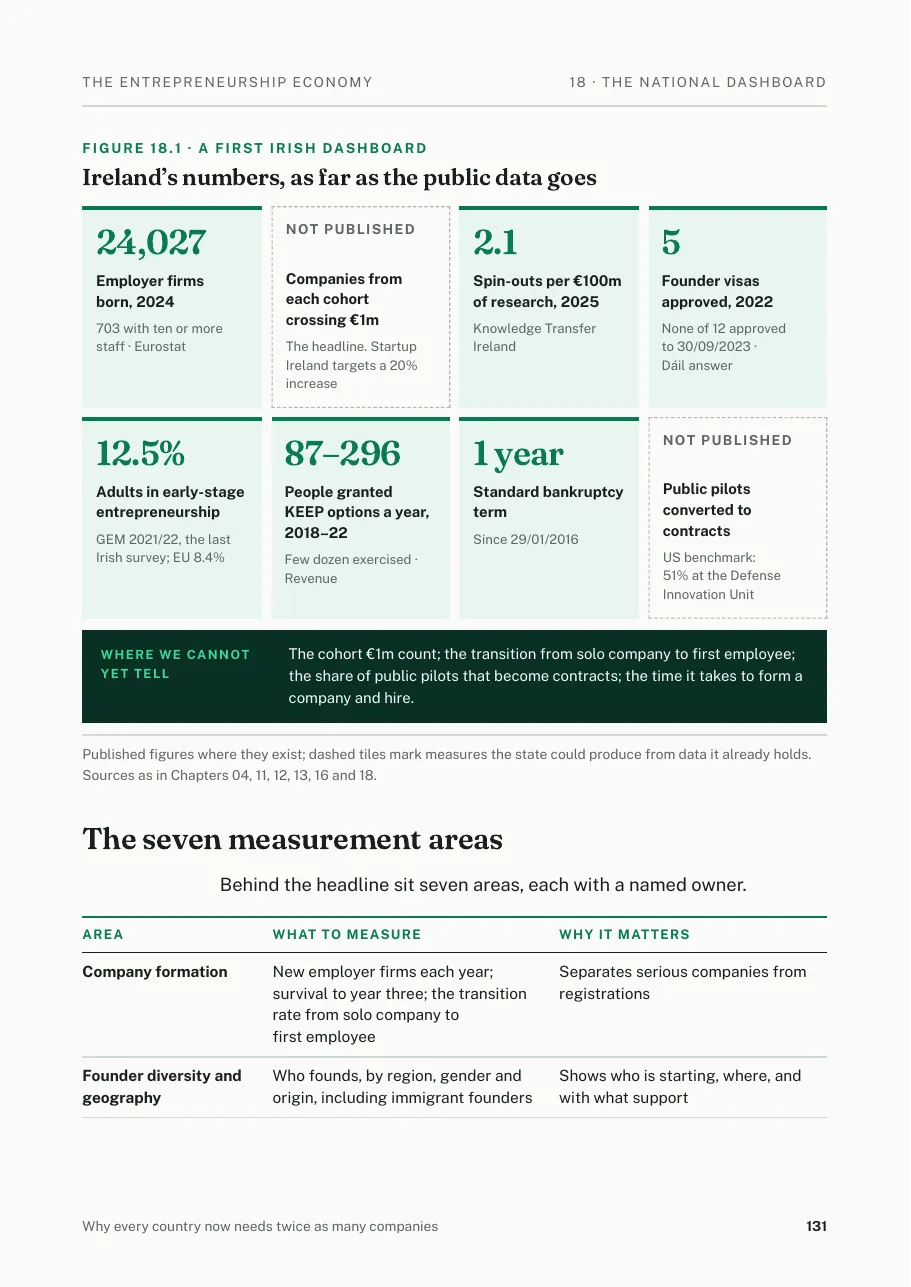
24,027
employer firms born in Ireland in 2024, of which 703 started with ten or more staff
Chapter 04
56%
of Ireland’s corporation tax paid by its ten largest companies in 2025
Chapter 01
+17%
firm creation in Portugal after a one-stop shop cut registration from 78 days to under an hour
Chapter 08
48 hours
to register an EU Inc online, for up to €100, under the Commission’s proposal
Chapter 09
51%
of the US Defense Innovation Unit’s completed prototypes converted into production contracts
Chapter 10
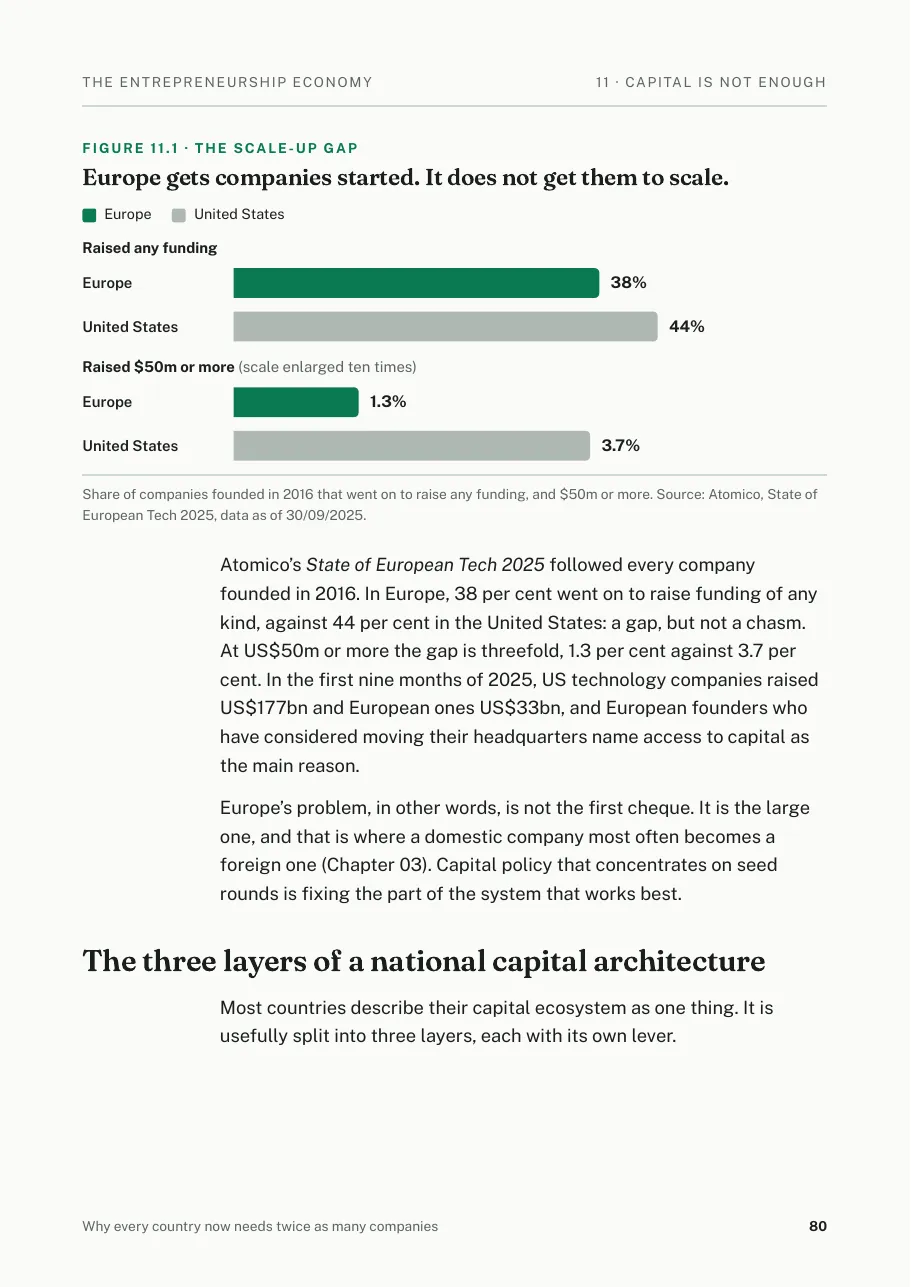
1.3%
of European companies founded in 2016 raised $50m or more, against 3.7 per cent in the United States
Chapter 11
2.1
spin-outs per €100m of research in Ireland in 2025, more than twice the US rate
Chapter 12
36%
of new start-ups on Carta in 2025 had a single founder, against 17 per cent in 2017
Chapter 15
How to use this paper
Ministers and their advisers, senior civil servants, enterprise and development agencies, university leaders, and the builders and investors who work alongside them.
The executive summary, Chapters 01 to 04, the first twelve months and where this lands. The political and economic case sits there.
Chapters 08 to 18. The architecture, the measurement, procurement, capital, universities, immigration, regions and the AI shock.
The whole paper, alongside Papers I and II. Chapter 07 and Chapter 14 are written with you in mind.
From the paper
A country that does not create employers will eventually run out of employment policy.
Download
The full third edition: the case, the architecture and the implementation, with a key-takeaways panel at the head of every chapter.
PDF · 4.5 MB · 151 pages. Free to read and share. No sign-up needed.
Cite this paper: DC Cahalane. The Entrepreneurship Economy: Why every country now needs twice as many companies, and the policy architecture that makes it possible. We're Doing This Wrong discussion series, Paper III. Third edition. December 2026. https://www.weredoingthiswrong.com/the-entrepreneurship-economy
A discussion series for ecosystem builders
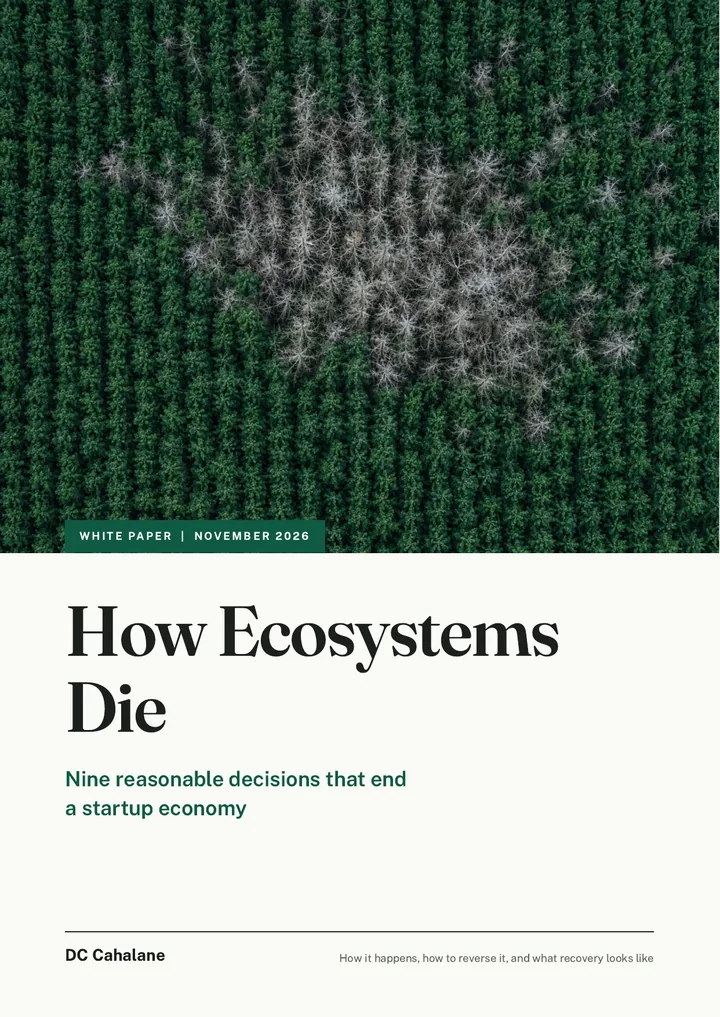 Paper I · 33 pagesHow Ecosystems DieNine reasonable decisions that end a startup economy: how it happens, how to reverse it, and what recovery looks like.Learn more ›
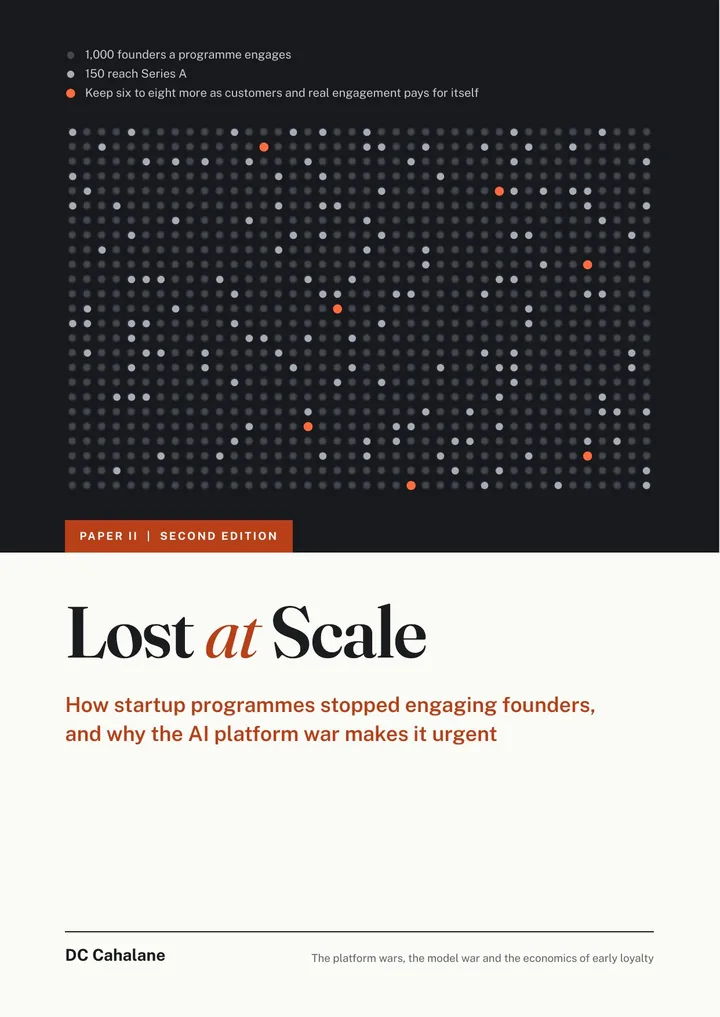 Paper II · Second edition · 97 pagesLost at ScaleHow startup programmes stopped engaging founders, and why the AI platform war makes it urgent.Learn more ›
 Paper IV · Second edition · 77 pagesThe Equity TrapWhy universities lose the companies their research creates, and what to build instead.Learn more ›
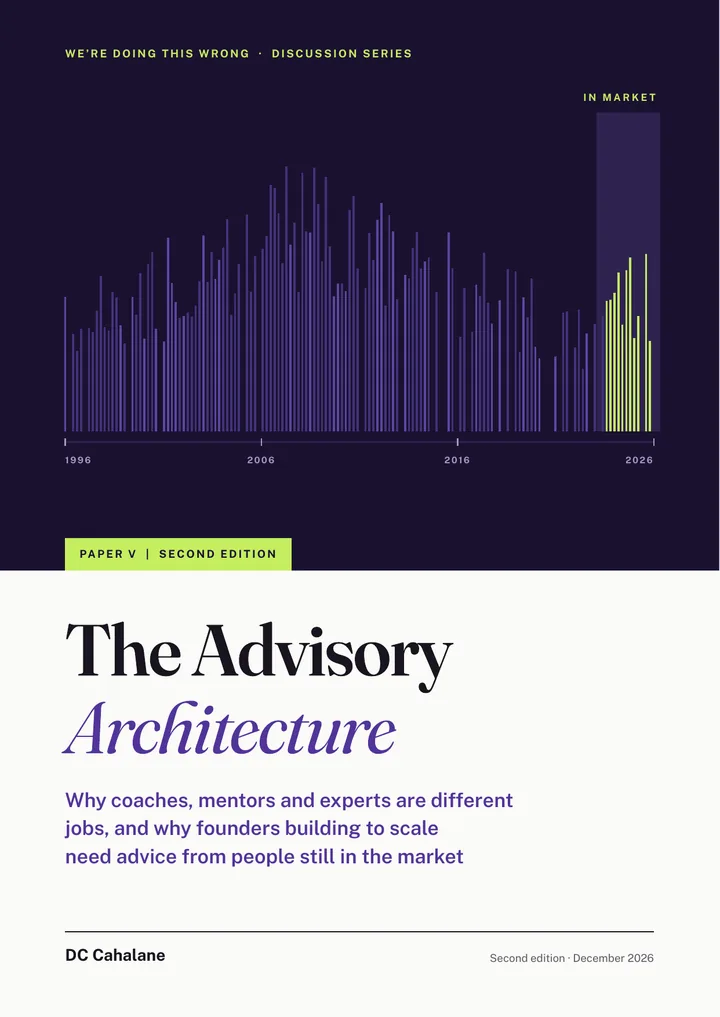 Paper V · Second edition · 64 pagesThe Advisory ArchitectureWhy coaches, mentors and experts are different jobs, and why founders building to scale need advice from people still in the market.Learn more ›
The book · March 2027
This paper is one part of a longer argument, set out in full in We’re Doing This Wrong. Join the list for the weekly essays, launch updates and each new paper as it is published.