Part one
The uncomfortable truth.
Why the current system rewards programme activity, audience photos, and short-term optics while founders lose time in fragmented support markets.
Book preview
Launching March 2027, the book argues that entrepreneurship support has been designed around the wrong moment, the wrong metrics, and the wrong customer.
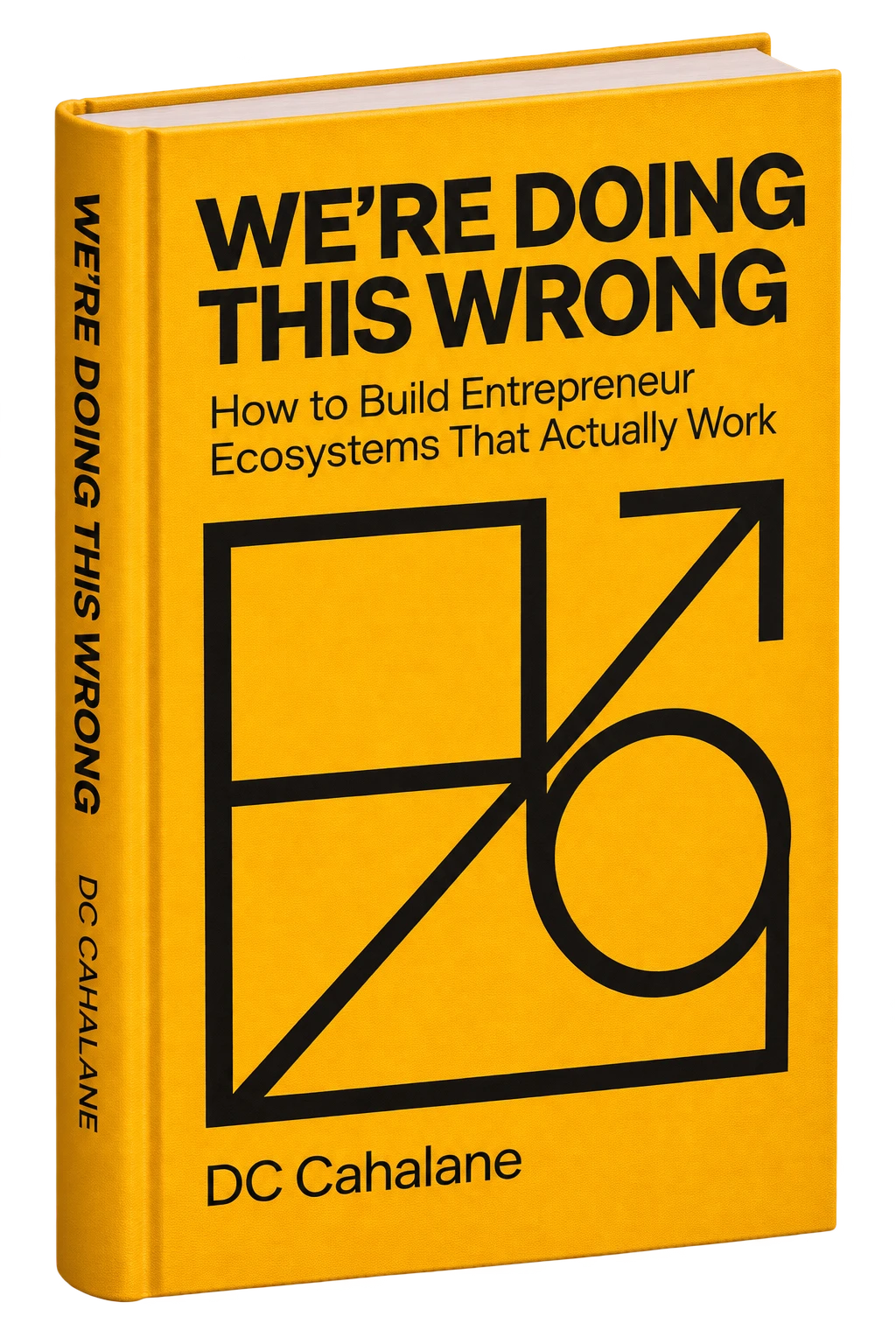
About the book
We're Doing This Wrong: How to Build Entrepreneur Ecosystems That Actually Work is a book by DC Cahalane, launching in March 2027. A practical field guide to building entrepreneur ecosystems that actually work, for leaders who want less programme theatre and more measurable progress. Its core idea is Ecosystem Architecture: design the conditions under which entrepreneurship compounds.
DC Cahalane is a founder, venture investor, and ecosystem advisor who has spent nearly 20 years working across founders, capital, corporates, and government.
Part one
Why the current system rewards programme activity, audience photos, and short-term optics while founders lose time in fragmented support markets.
Part two
The critical early stage where entrepreneurs shape the company, choose markets, find trust, and need infrastructure before a programme notices them.
Part three
A framework for designing environments where entrepreneurship can thrive before capital, talent, and momentum move somewhere else.
Sample chapter excerpt
Entrepreneurship support often mistakes the visible middle of the journey for the decisive moment. By the time the pitch deck is polished, the accelerator cohort is selected, and the demo day is scheduled, many of the choices that define the company have already been made.
The work starts earlier. It starts when a founder is still deciding whether the problem is worth years of their life, whether the first customers can be trusted, whether the market is reachable, whether capital is available on terms that make sense, and whether the system around them reduces friction or simply adds rooms to navigate.