01
Room 03 · Founders, operators & the builders paying the real cost
Know what support is worth taking.
A founder-side field guide for navigating ecosystems that ask you to pitch, mentor, network, apply, perform, and wait while the useful help often arrives too late to change the company.
Founders are the only people who pay the full cost of bad support.
This page is for you if
Opportunity is everywhere. Useful help is rare.
If any of these signals sound familiar, the argument that follows is written for founders, operators, and early teams trying to protect momentum while navigating rooms that often ask more than they give.
02
Programmes promise access, but decision-makers never arrive.
03
Mentorship is plentiful, but specific help is scarce.
04
Grants, pilots, and competitions consume the time you need to build.
05
Visibility is offered as progress, but customers and capital stay distant.
06
You want to support the ecosystem later without becoming ceremonial mentor.
The founder argument
If the room gives you visibility without customers, mentorship without specificity, or access without decisions, it may be extracting more than it gives.
The book is not anti-support. It is anti-theatre. Founders need useful people, fast signals, technical clarity, customer reality, capital pathways, and permission to ignore rooms that cannot change the company.
Why this matters now
Your time is the hidden subsidy in a broken ecosystem.
Institutions can count meetings, cohorts, events, workshops, newsletters, pilots, and reports. Founders pay in attention, momentum, and opportunity cost. The book helps entrepreneurs identify which ecosystem offers are genuinely useful, which are institutionally convenient, and which should be declined quickly.
01 · Time
Recognise theatre before it consumes the company.
Learn to spot offers that provide visibility, logo association, generic advice, or content for someone else’s report without changing customers, capital, product, or capability.
02 · Decisions
Ask better questions before joining anything.
Evaluate accelerators, grants, competitions, pilots, university programmes, and advisory networks by timing, incentives, access, deliverables, and founder agency.
03 · Ecosystem choice
Find places that reduce friction.
Look for ecosystems that help you make better early decisions around customers, capital, technical choices, hiring, first proof points, and the next useful relationship.
The founder trap
Opportunity can become extraction when the system needs your presence more than your progress.
Pitch fatigue
Another stage, panel, or competition can feel like momentum while the real work of customer discovery, hiring, fundraising, or building is delayed.
Generic mentorship
Advice without context often adds noise. Founders need specific help from people who understand the stage, market, technology, and constraints.
Institutional drag
Long applications, vague pilots, slow procurement, and unclear university terms convert founder energy into administrative compliance.
Late support
Many programmes arrive after the company’s most expensive formation-stage decisions have already been made. Late applause is not infrastructure.
What useful support looks like
Founder value is practical, specific, timely, and asymmetric.
Useful support should help you do something you could not do before: speak to the right buyer, understand a technical dependency, avoid a cap-table mistake, find a credible first hire, reach a serious investor, or see why a market assumption is wrong.
The book gives founders language for refusing support that is really performance, and for demanding ecosystem architecture that respects the one resource institutions do not pay for: founder time.
Does this help me make a better decision before the cost of being wrong compounds?
What to read for this audience
Part IV is built for entrepreneurs.
- 01
The Entrepreneur’s Reality
Why founders experience ecosystem dysfunction more directly than every paid participant around them.
- 02
What Founders Actually Learn
Why velocity-enabling peers and specific technical guidance beat generic mentorship.
- 03
The Survival Guide
How to identify architectural value while avoiding programmes that consume scarce time.
- 04
From Giving Back to Building Forward
How successful founders can create infrastructure for the next generation instead of performing nostalgia.
- 05
The Ecosystem Flywheel
How founder-led density, knowledge recycling, and trust compound when the right architecture exists.
Use the book to decide
Four founder choices that broken ecosystems make harder.
01
Which rooms deserve your time
Distinguish rooms that create customers, capital, confidence, or capability from rooms that simply create exposure.
02
Which programmes to avoid
Apply a sharper filter to accelerators, grant processes, competitions, corporate pilots, and university pathways.
03
Which ecosystems to trust
Look for founder-led density, quick access, practical expertise, clear incentives, and evidence that people help before they extract.
04
How to build forward
When you have leverage, contribute to the architecture: useful introductions, honest signals, founder-friendly norms, and next-generation infrastructure.
What readers take away
A founder-side checklist for ecosystem navigation.
A theatre detector
Spot support that asks for your story but gives no customer, capital, capability, or confidence.
A timing test
Judge whether support meets you during formation or after the critical choices are already made.
A value filter
Prioritise peer relationships, specific guidance, fast access, and tangible deliverables.
A builder lens
Understand how founders can eventually build infrastructure that compounds beyond their own company.
White papers
Free to read.
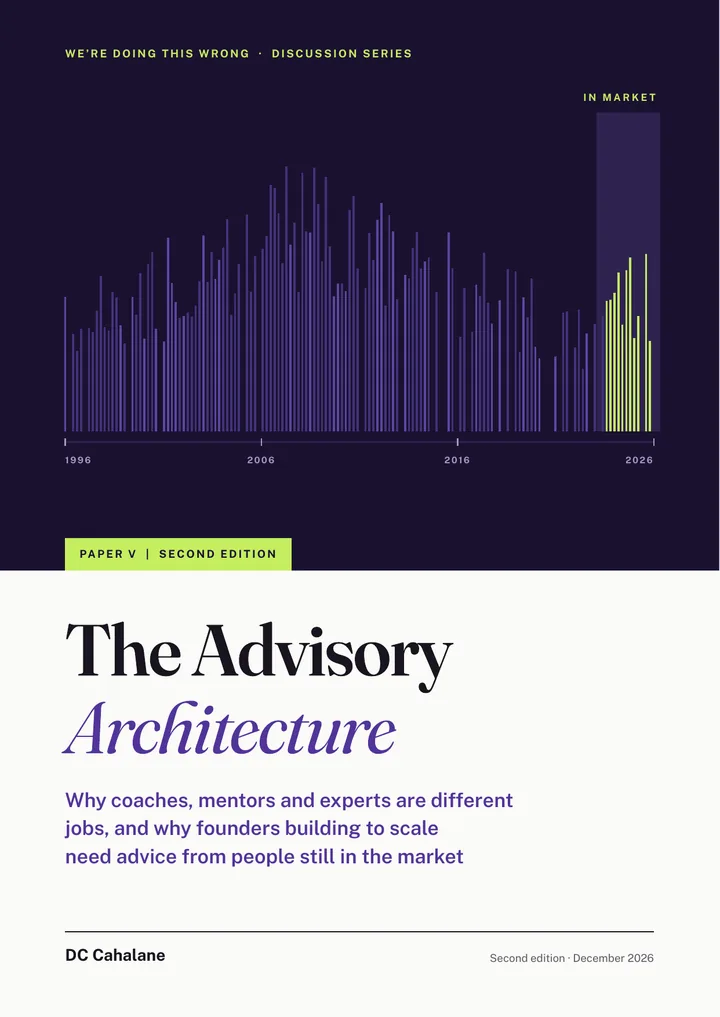 Paper V · Second edition · 64 pagesThe Advisory ArchitectureWhy coaches, mentors and experts are different jobs, and why founders building to scale need advice from people still in the market.Learn more ›
 Paper I · 33 pagesHow Ecosystems DieNine reasonable decisions that end a startup economy: how it happens, how to reverse it, and what recovery looks like.Learn more ›
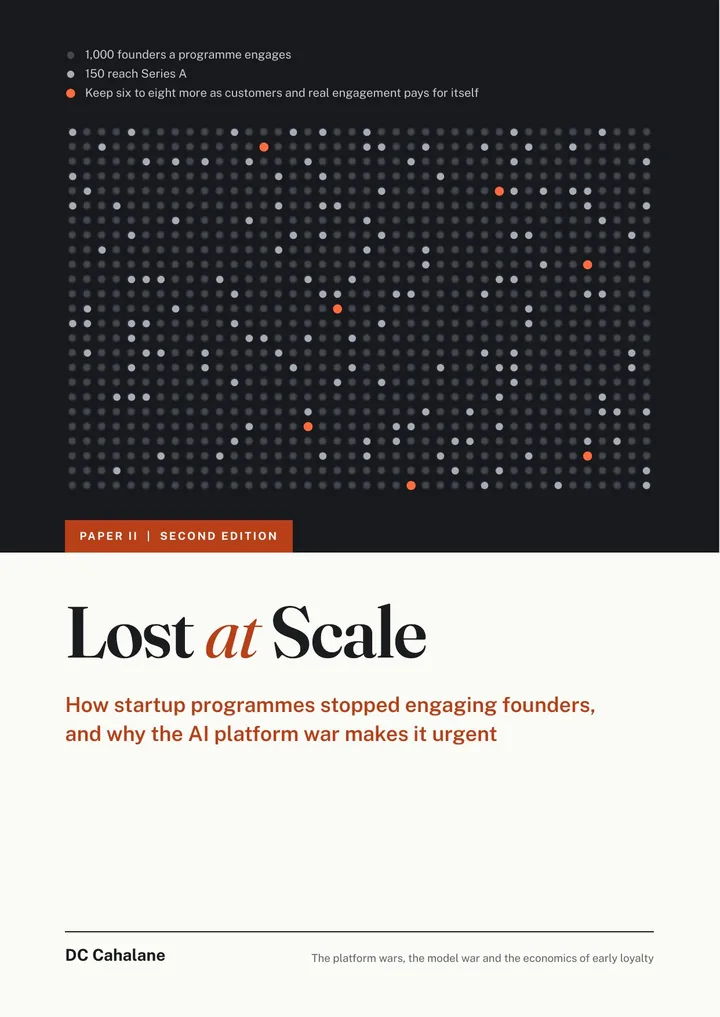 Paper II · Second edition · 97 pagesLost at ScaleHow startup programmes stopped engaging founders, and why the AI platform war makes it urgent.Learn more ›
For founders and early teams