01
Count activity
Success is measured by activity.
Paper I · A discussion series for ecosystem builders
Nine reasonable decisions that end a startup economy: how it happens, how to reverse it, and what recovery looks like.
The argument
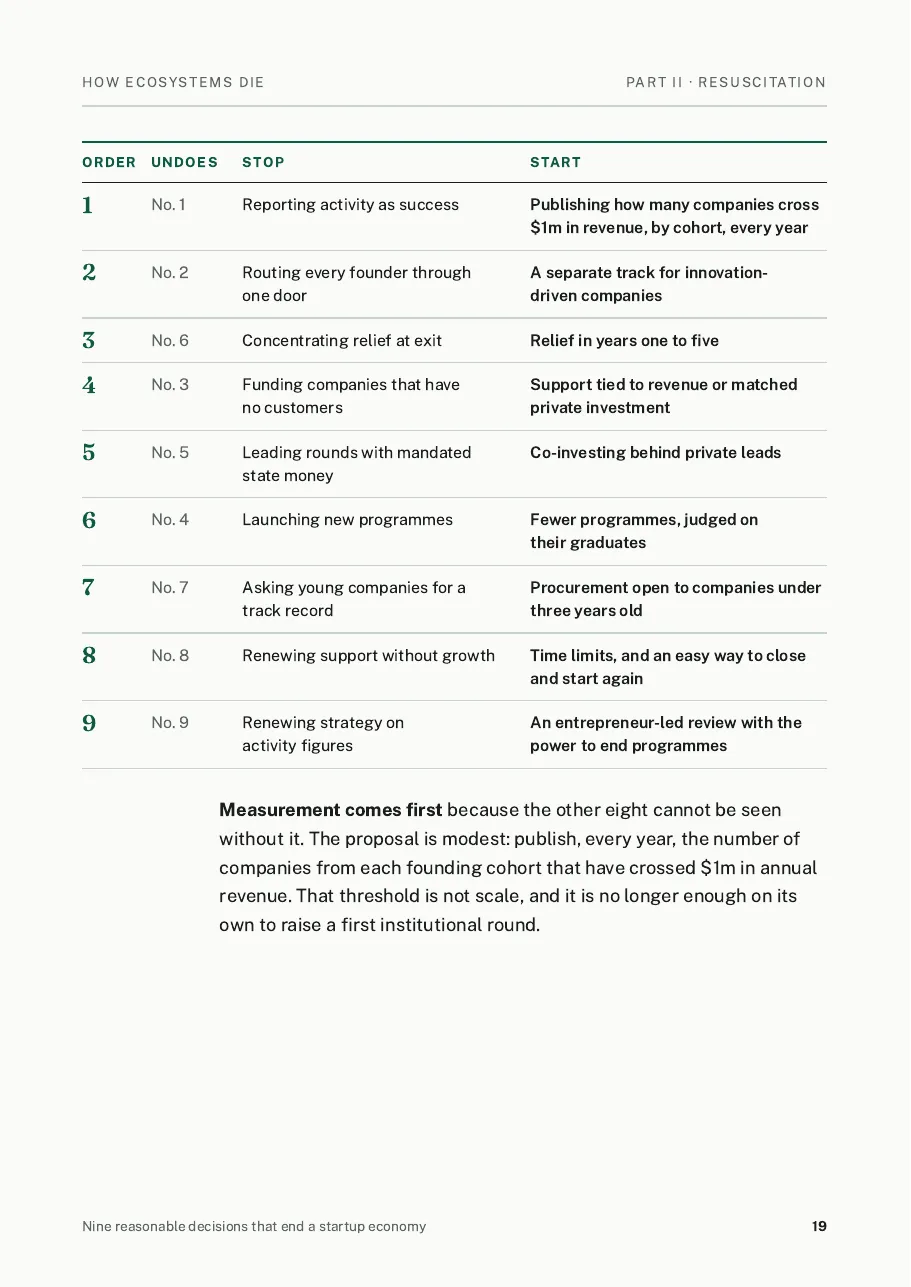
9Decisions, and nine reversals in the order to make them
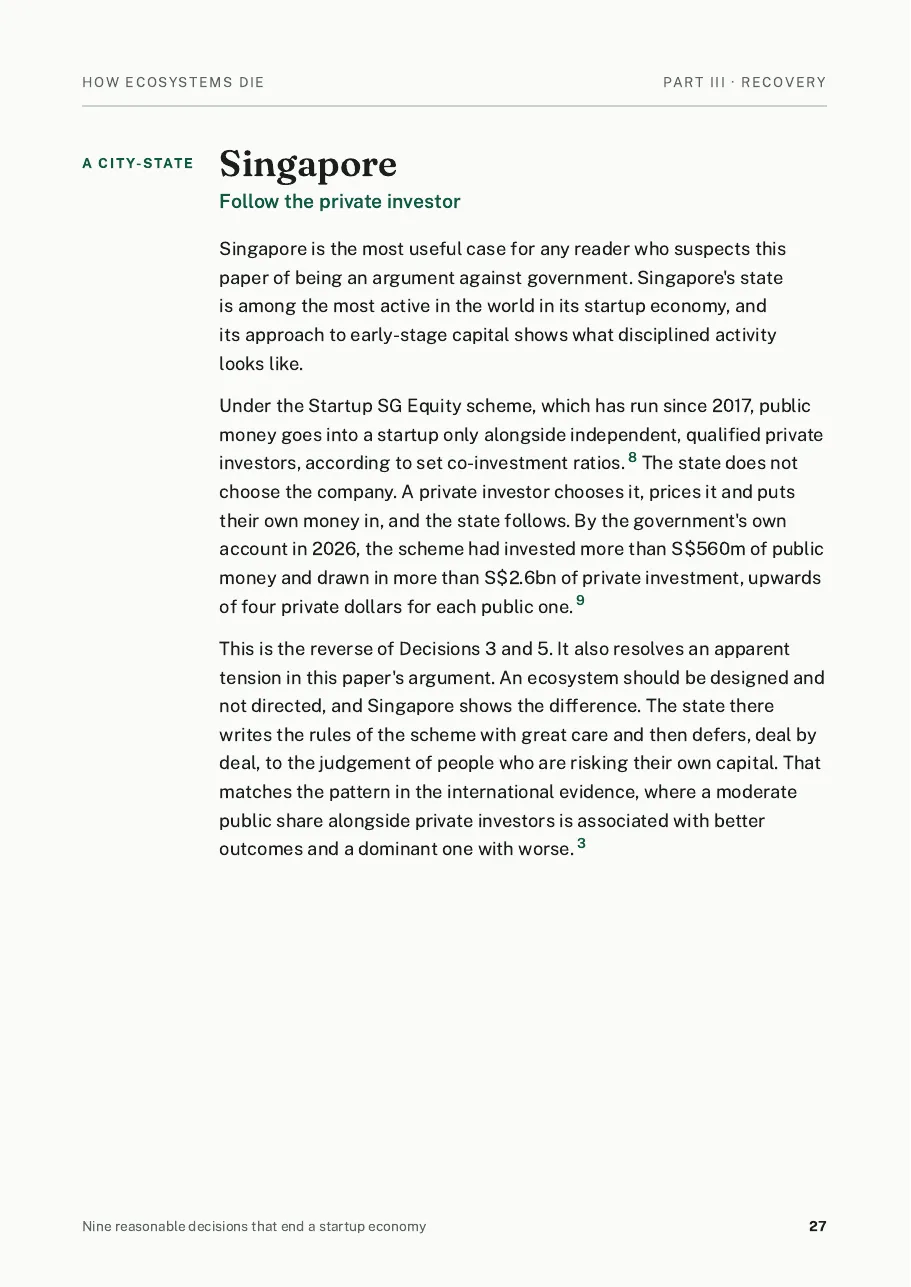
3Places that got it right: Estonia, Singapore and Boulder, Colorado
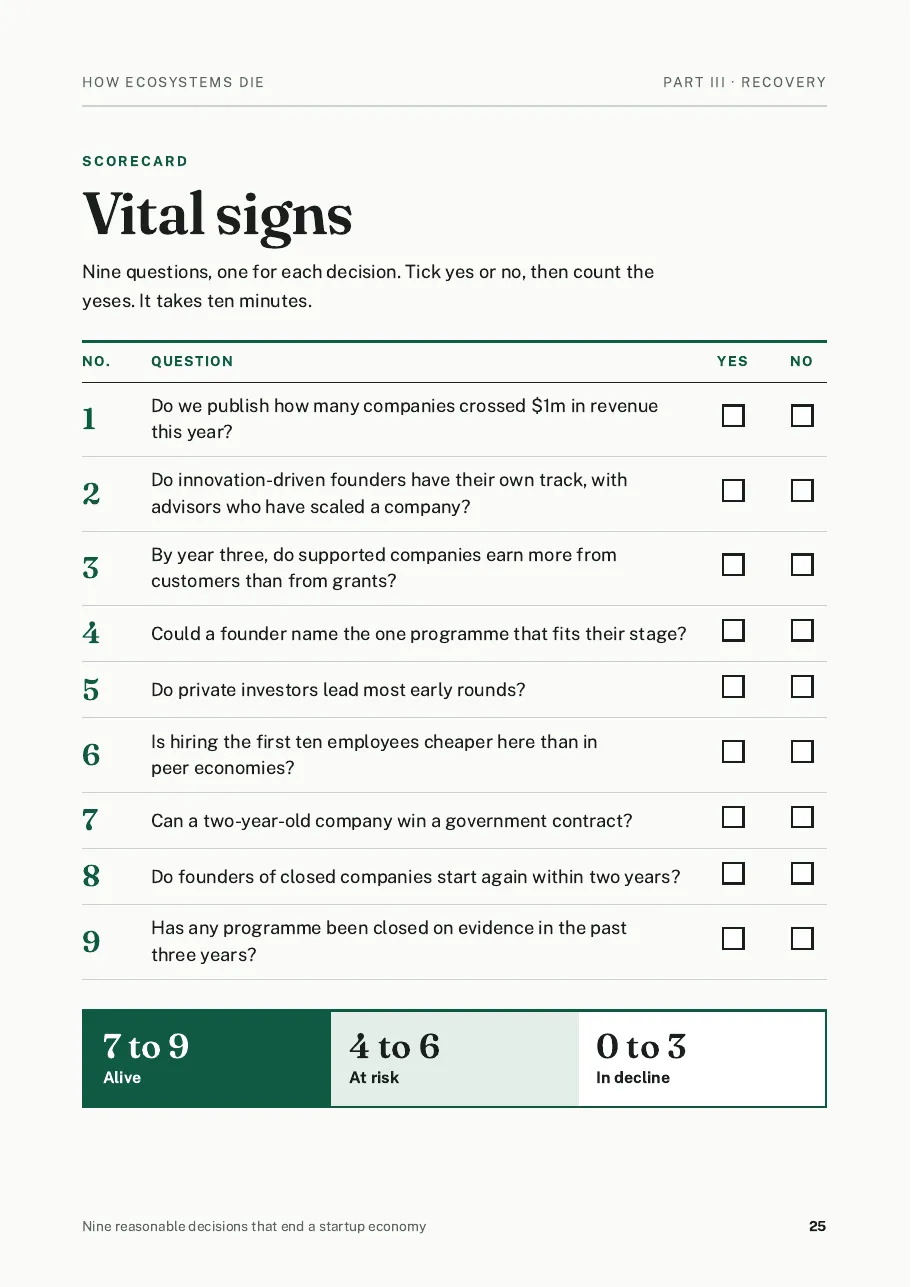
10 minTo answer the nine vital-signs questions
Summary
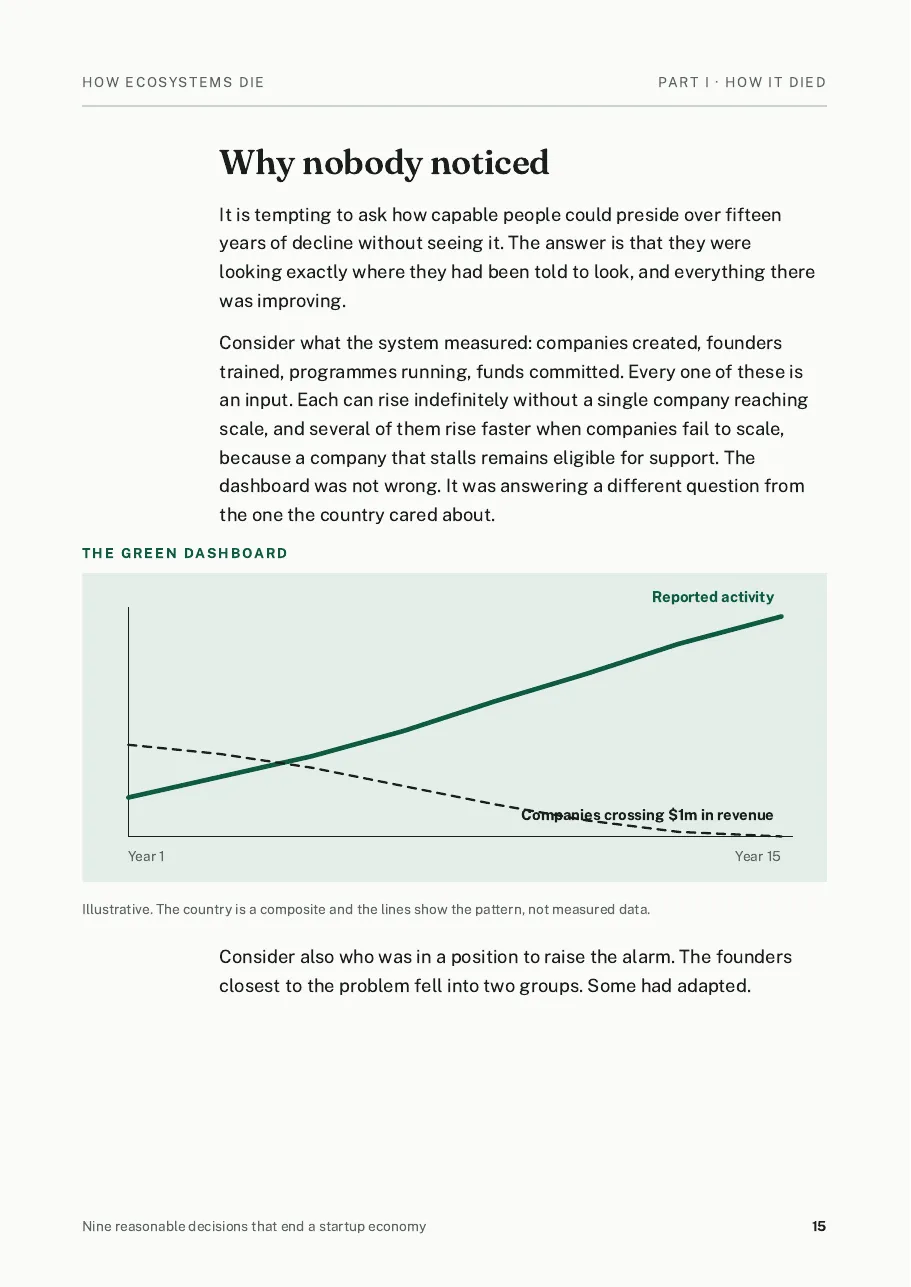
An ecosystem in decline does not look like one. The measures governments use to track startup policy count activity, and activity increases all the way down. The first third of this paper describes the decline. The remaining two thirds are about what to do, because the central finding is an encouraging one: an ecosystem that dies by decisions can be revived by decisions.
Part II sets out nine reversals in the order they should be made. Part III describes what a living ecosystem looks like, offers nine questions any minister or agency head can answer in ten minutes, and draws on three places that show the reversals working at very different scales: Estonia, Singapore and Boulder, Colorado.
The country described in Part I does not exist. It is a composite. No single economy has made all nine decisions, and most have made several. Readers are invited to count their own.
Inside the paper
What is inside
The best annual report in the country’s history. Nine reasonable decisions. Why nobody noticed.
The turn. Nine reversals, in the order to make them. What improvement looks like.
Vital signs. Three places that got it right. What keeps it alive. Fifteen years later.
Part I · How it died
Each is sensible, popular and defensible. This paper follows nine of them.
01
Success is measured by activity.
02
High-growth companies are supported through the same door as every other small business.
03
Grants become a company’s first revenue.
04
Programmes multiply.
05
State money comes to dominate early investment.
06
Tax relief is concentrated at exit while the early years become more expensive.
07
Rules are written with established companies in mind.
08
Companies that survive without growing are kept alive while the best founders leave.
09
The strategy is then renewed, because every number it reports is rising.
Part III · Recovery
Tick yes or no, then count the yeses. It takes ten minutes.
7 to 9 yeses: alive. 4 to 6: at risk. 0 to 3: in decline.
From the foreword
A dead ecosystem is not an empty one. That is the first thing to understand about it, and the reason so few people notice when it happens.
Ecosystems die by decisions. What was decided can be decided again.
Download
The full paper: the nine decisions, the nine reversals in the order to make them, the vital-signs scorecard, and the three places that got it right.
PDF · 5.4 MB · 33 pages. Free to read and share. No sign-up needed.
Cite this paper: DC Cahalane. How Ecosystems Die: Nine reasonable decisions that end a startup economy. We're Doing This Wrong discussion series, Paper I. November 2026. https://www.weredoingthiswrong.com/how-ecosystems-die
A discussion series for ecosystem builders
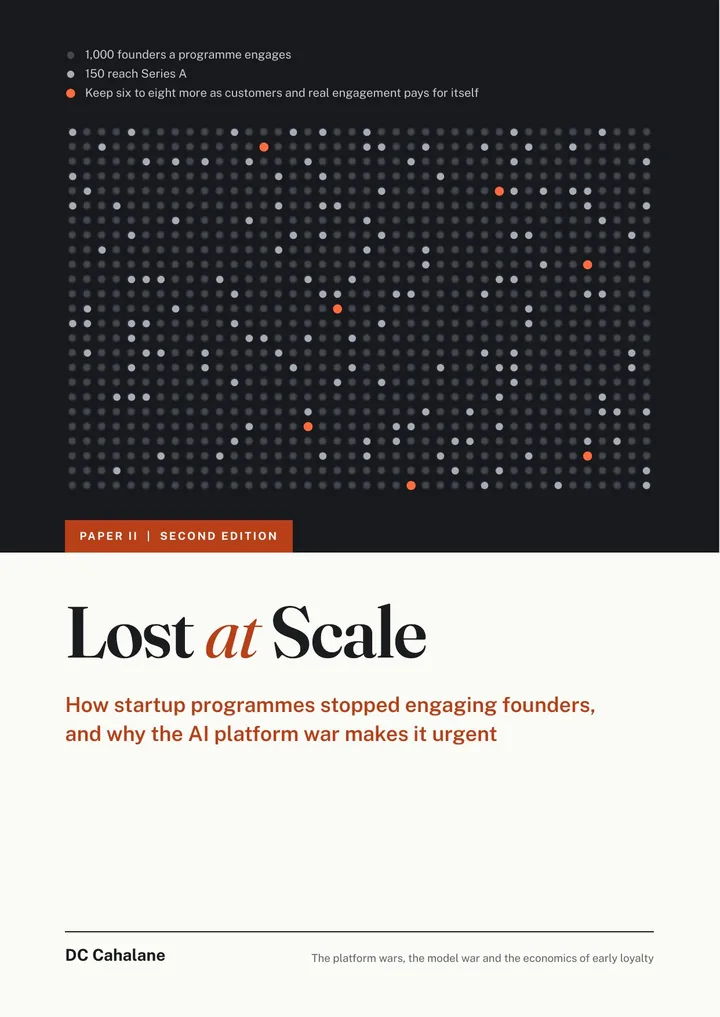 Paper II · Second edition · 97 pagesLost at ScaleHow startup programmes stopped engaging founders, and why the AI platform war makes it urgent.Learn more ›
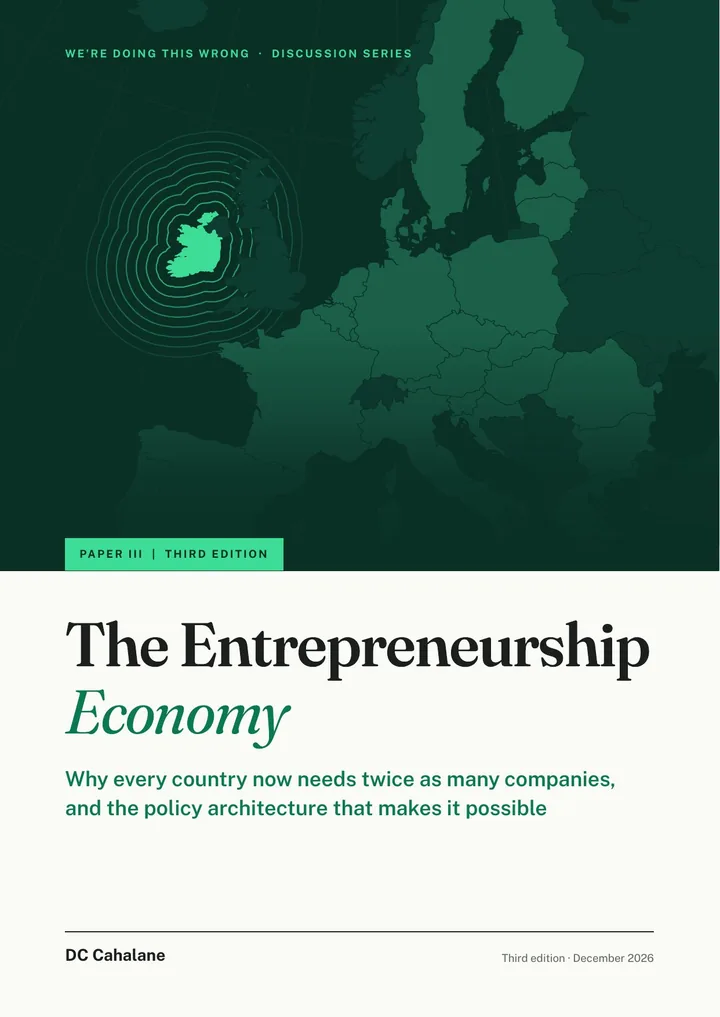 Paper III · Third edition · 151 pagesThe Entrepreneurship EconomyWhy every country now needs twice as many companies, and the policy architecture that makes it possible.Learn more ›
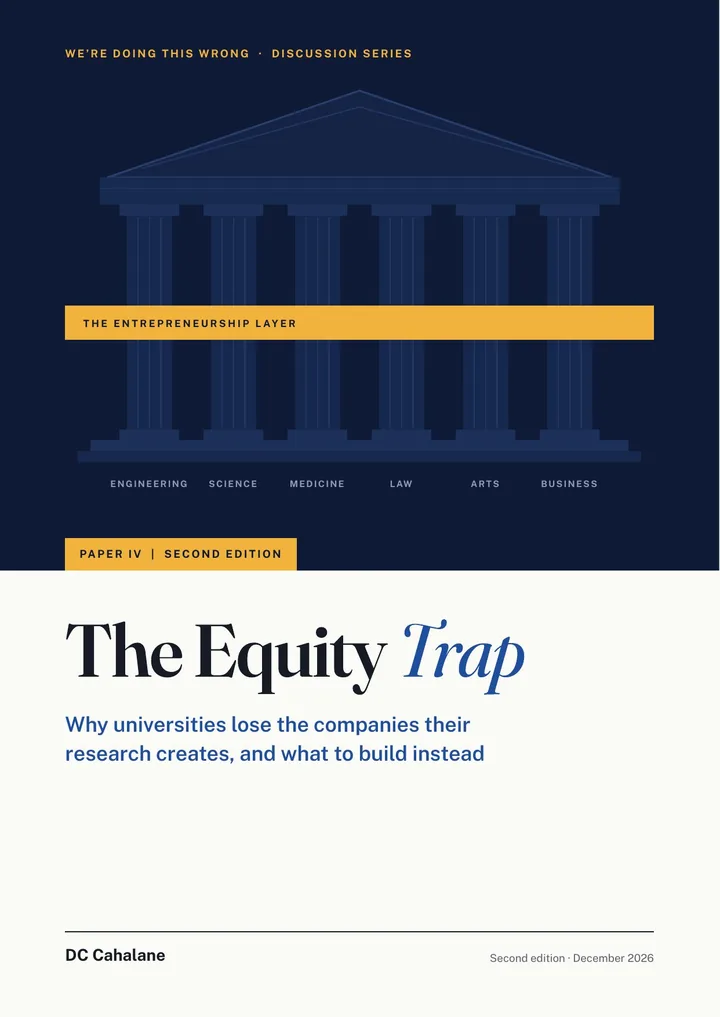 Paper IV · Second edition · 77 pagesThe Equity TrapWhy universities lose the companies their research creates, and what to build instead.Learn more ›
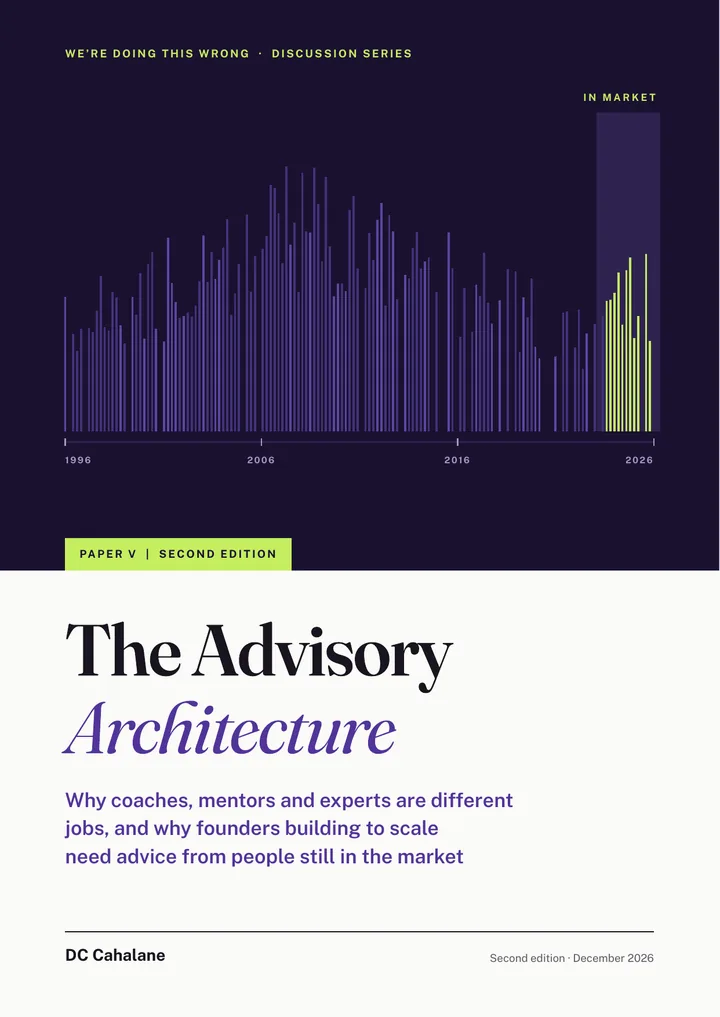 Paper V · Second edition · 64 pagesThe Advisory ArchitectureWhy coaches, mentors and experts are different jobs, and why founders building to scale need advice from people still in the market.Learn more ›
The book · March 2027
This paper is one part of a longer argument, set out in full in We’re Doing This Wrong. Join the list for the weekly essays, launch updates and each new paper as it is published.