87%
of critical founder decisions are made before support programmes engage.
Author’s analysis
A new book by DC Cahalane
A practical field guide to building entrepreneur ecosystems that actually work, for leaders who want less programme theatre and more measurable progress.
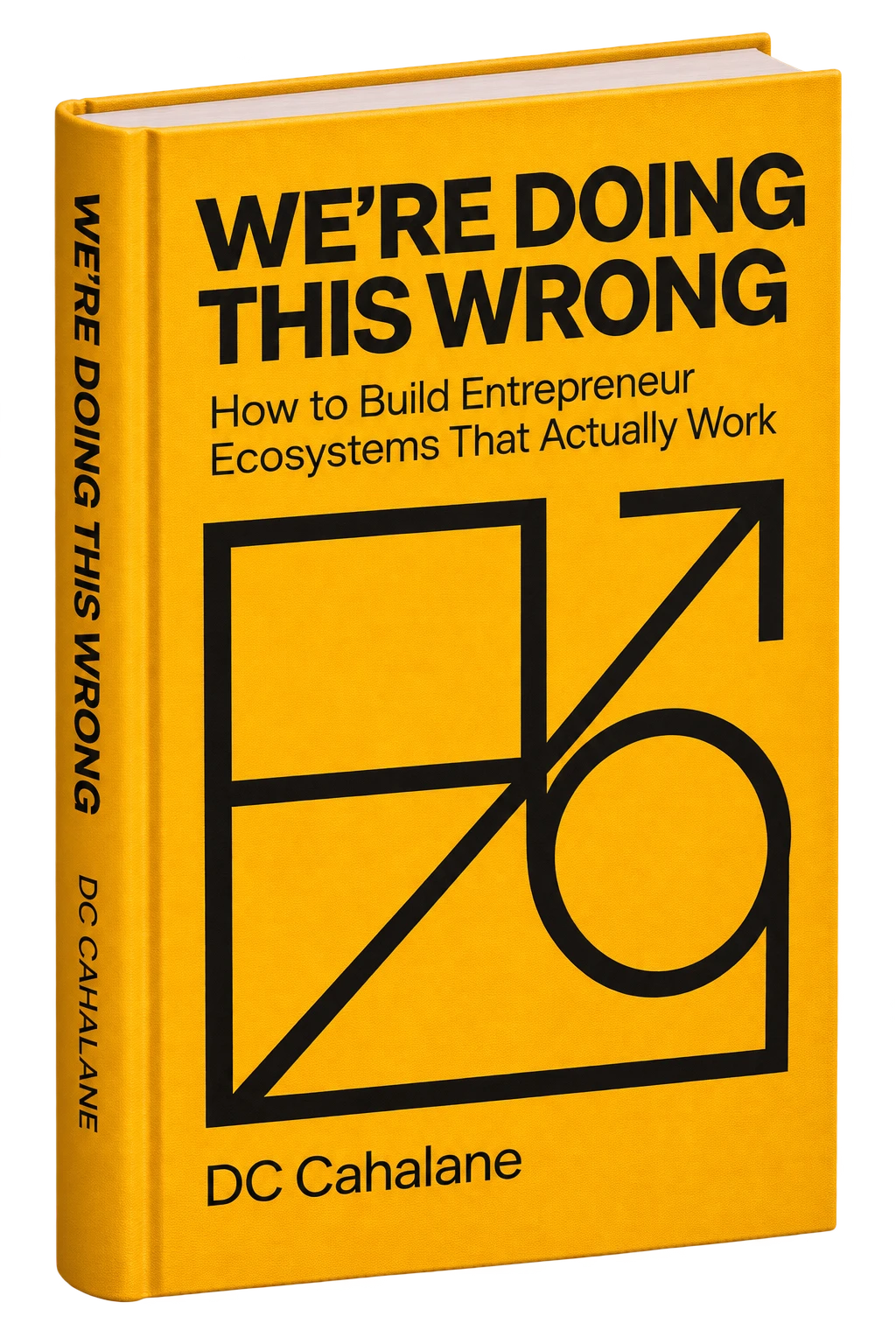
This isn’t another book about entrepreneurship. It’s a blueprint for the infrastructure that makes entrepreneurship possible.
The current state
€150bn
wasted every year on innovation theatre.
Author’s analysis
87%
of critical founder decisions are made before support programmes engage.
Author’s analysis
130 of 155
US universities did not earn enough from licensing to cover their technology transfer staff and patent costs.
Brookings, 2012 data, cited in The Equity Trap
4–12 months
is how long most UK spin-outs take to form, on the government’s 2023 review.
The Equity Trap, Section 01
Why startups die
In the early days, a startup’s success comes down to one thing: a learning loop. Try something, see what works, see what doesn’t, and go again. The faster the loop turns, the better the odds. Most startups don’t fail for lack of an idea. They fail because they learn too slowly, or learn fast in the wrong direction.
Every week a founder spends waiting on a grant decision, a programme intake or a corporate pilot is a turn of the loop lost.
Start here
Truth 01
$8bn
wasted each year on corporate startup programmes.
Author’s analysis
Too much startup support is measured by rooms filled, reports published, and programmes launched rather than companies formed, customers found, or friction removed.
Truth 02
3–6x
the return on investment from architectural engagement.
Author’s analysis
More programmes are not enough. Stronger ecosystems arrange capital, customers, talent, trust, and timing around the founder’s real path. Deliberate design instead of direct control.
Truth 03
40%
of global employment is exposed to AI.
IMF estimate, cited in The Entrepreneurship Economy
As companies become faster to build and scale, the places with better entrepreneurial infrastructure will compound advantage while others watch talent move elsewhere.
Why now
Large companies are becoming more productive with fewer people. The link between firm growth and job growth has weakened. And AI-native founders are choosing their stack now.
If tomorrow’s companies are half the size, a country needs twice as many of them.
From The Entrepreneurship Economy
Read the paper38%
fall in Klarna’s full-time staff between 2022 and 2024, while its revenue grew to $2.8bn.
The Entrepreneurship Economy, Chapter 02
36%
of new start-ups on Carta in 2025 had a single founder, against 17 per cent in 2017.
The Entrepreneurship Economy, Chapter 15
$3m+
in credit offers held by a single early-stage startup in 2026, about the size of a median US seed round.
Lost at Scale, Section 05
The framework
Diagnose the theatre, design the conditions, make outcomes compound. The core framework for designing systems around formation-stage support, not demo days, vanity metrics, or grant optics.
Who this is for
Free diagnostic
Join the launch list and get the Startup Theatre Audit: a practical diagnostic for spotting whether an ecosystem is producing founder outcomes or funding startup theatre.
12
Free white papers
Practical tools for building ecosystems that serve entrepreneurs first. No sign-up needed.
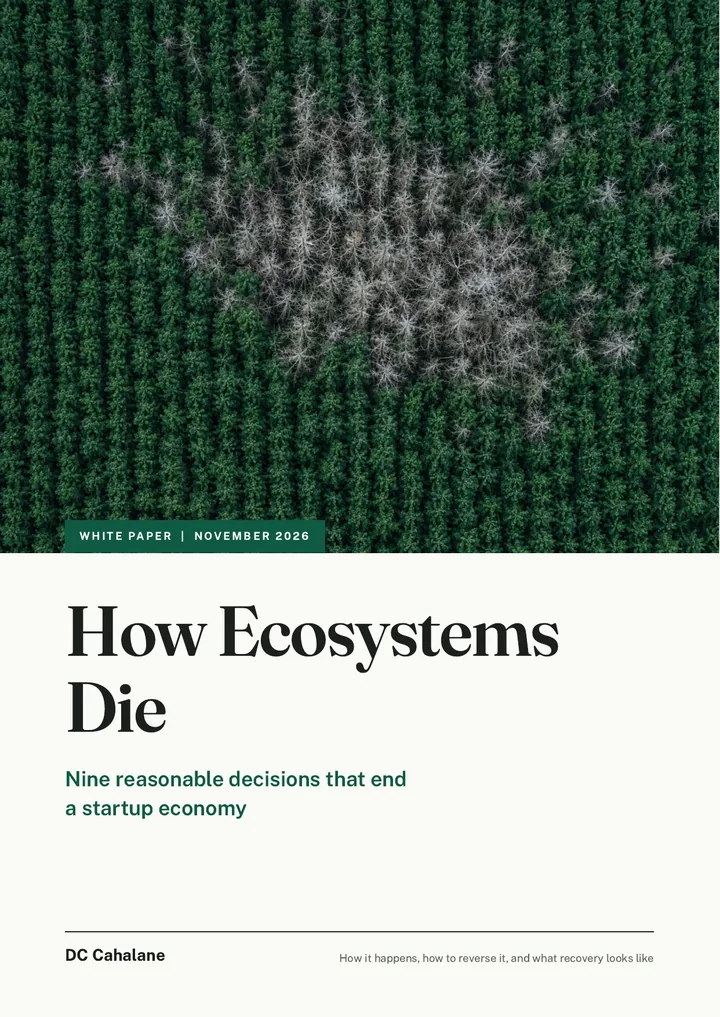 Paper I · 33 pagesHow Ecosystems DieNine reasonable decisions that end a startup economy: how it happens, how to reverse it, and what recovery looks like.Learn more ›Free download
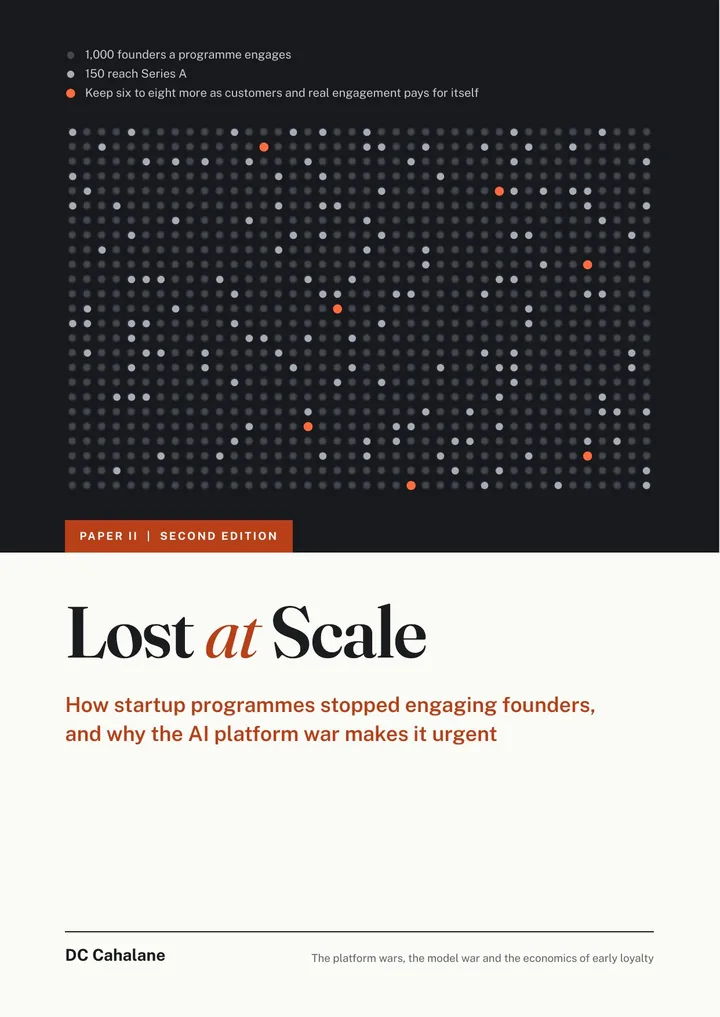 Paper II · Second edition · 97 pagesLost at ScaleHow startup programmes stopped engaging founders, and why the AI platform war makes it urgent.Learn more ›Free download
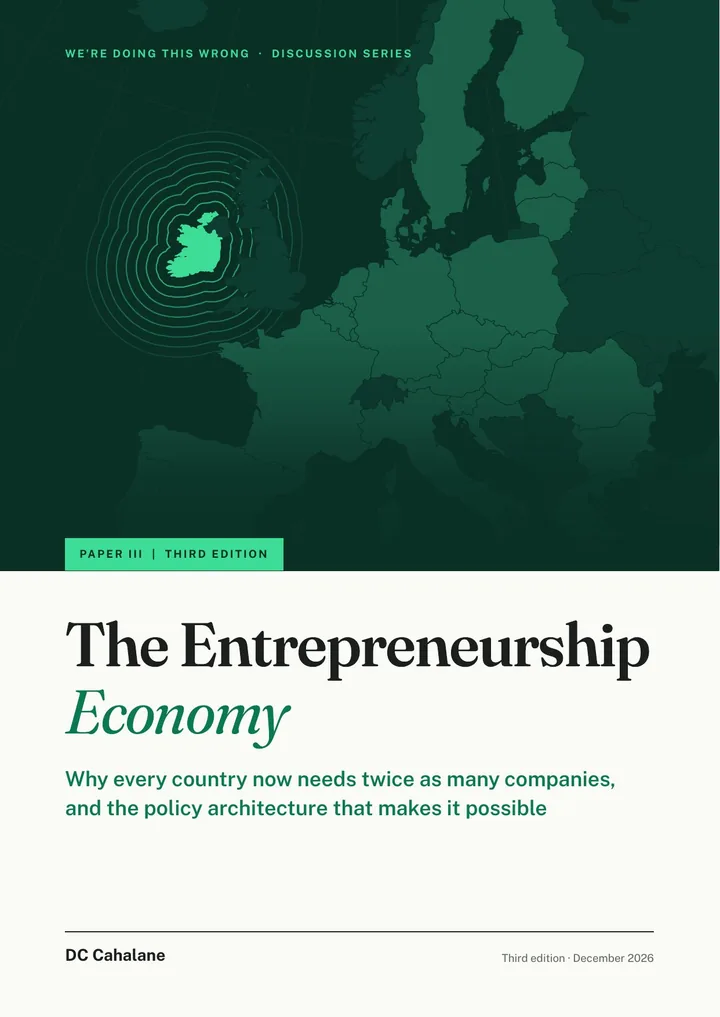 Paper III · Third edition · 151 pagesThe Entrepreneurship EconomyWhy every country now needs twice as many companies, and the policy architecture that makes it possible.Learn more ›Free download
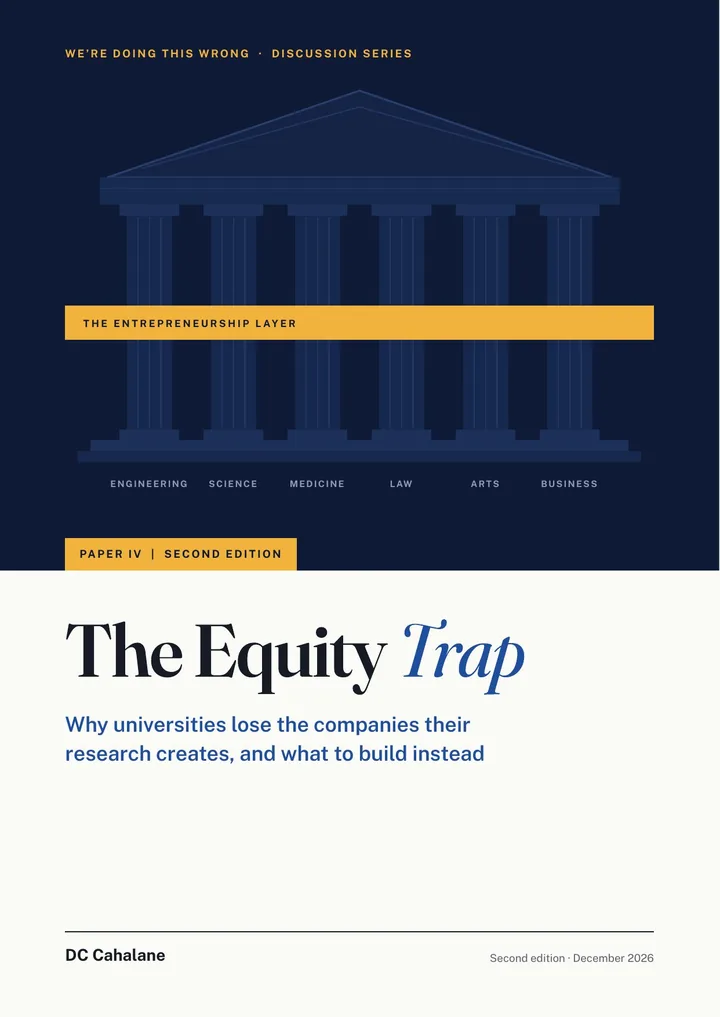 Paper IV · Second edition · 77 pagesThe Equity TrapWhy universities lose the companies their research creates, and what to build instead.Learn more ›Free download
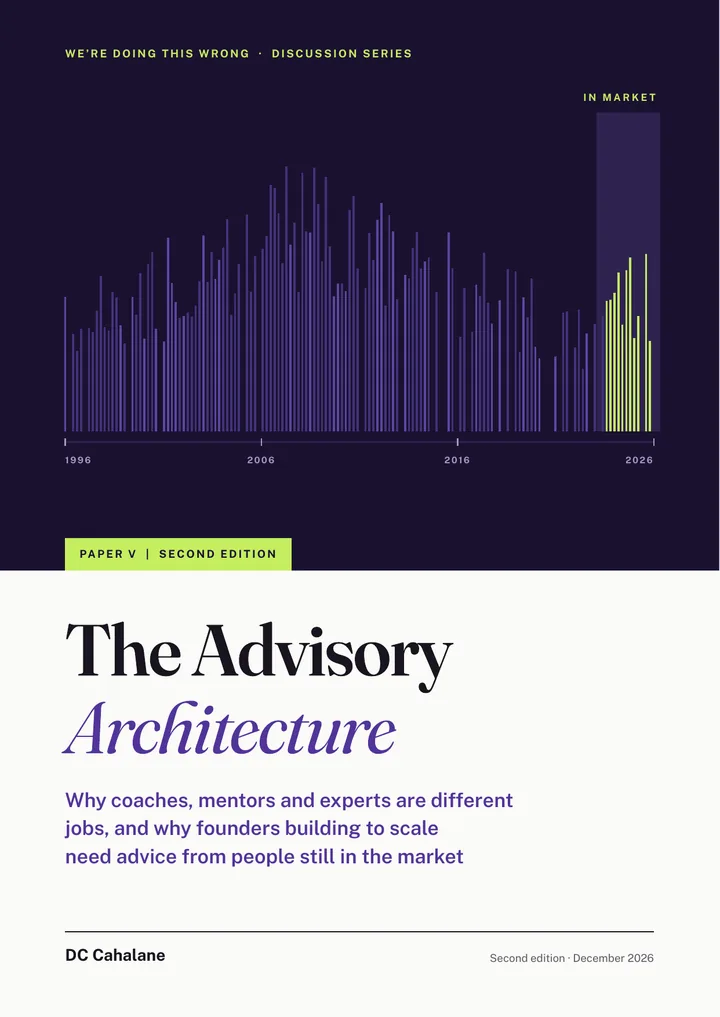 Paper V · Second edition · 64 pagesThe Advisory ArchitectureWhy coaches, mentors and experts are different jobs, and why founders building to scale need advice from people still in the market.Learn more ›
Field Notes · Latest on Substack
Walk into any innovation district and the scene looks right: gleaming hubs, keynote stages, demo days, lanyards everywhere. But too often the system meets the entrepreneur after the decisions that matter have already been made.
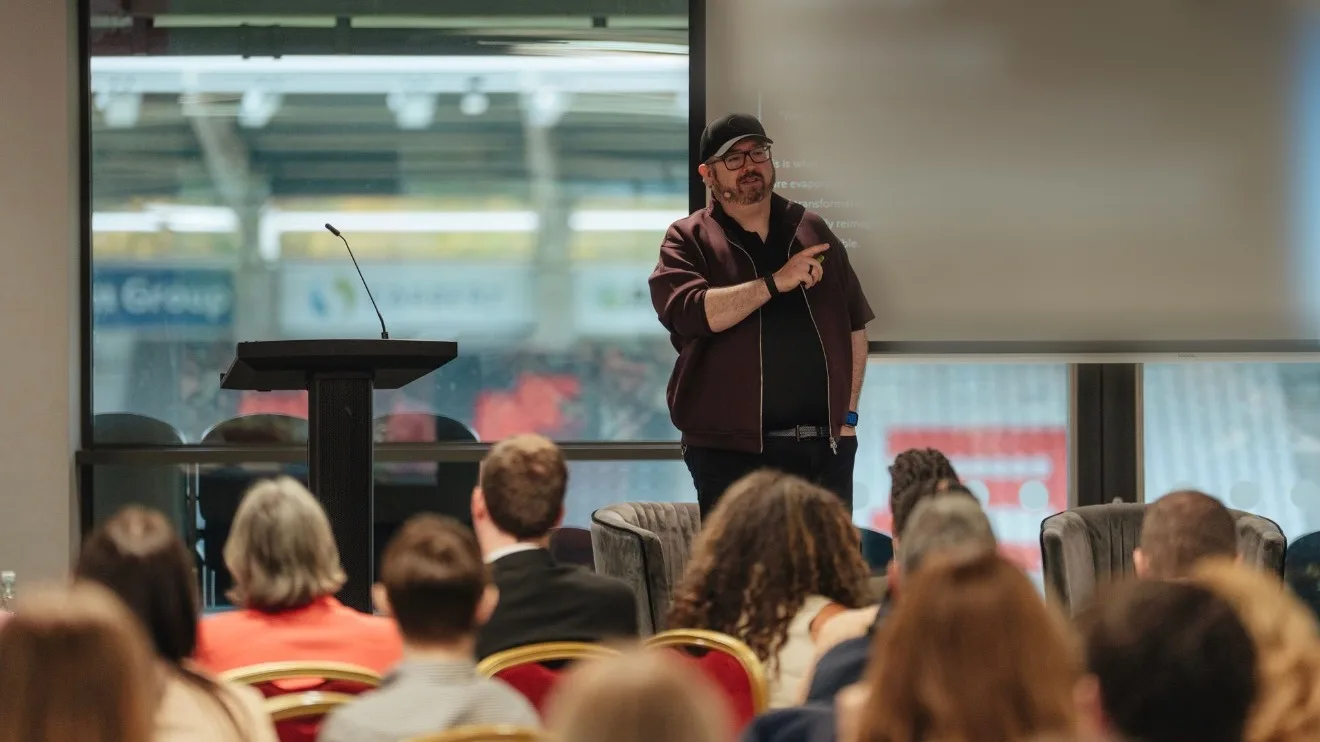
About the author
DC Cahalane is a founder, venture investor, and ecosystem advisor who has spent nearly 20 years working across founders, capital, corporates, and government. He has built and supported startup ecosystems across three continents, and seen first-hand where innovation spending turns into startup theatre.
Operator viewHow support feels when the company is still forming.
Investor viewWhere weak infrastructure turns into lost momentum.
System viewHow incentives reward activity instead of outcomes.
March 2027 · Worldwide release
Weekly essays, launch updates, pre-release frameworks, and early resource drops for people who are done funding startup theatre.